What inspired the birth of Pangea?
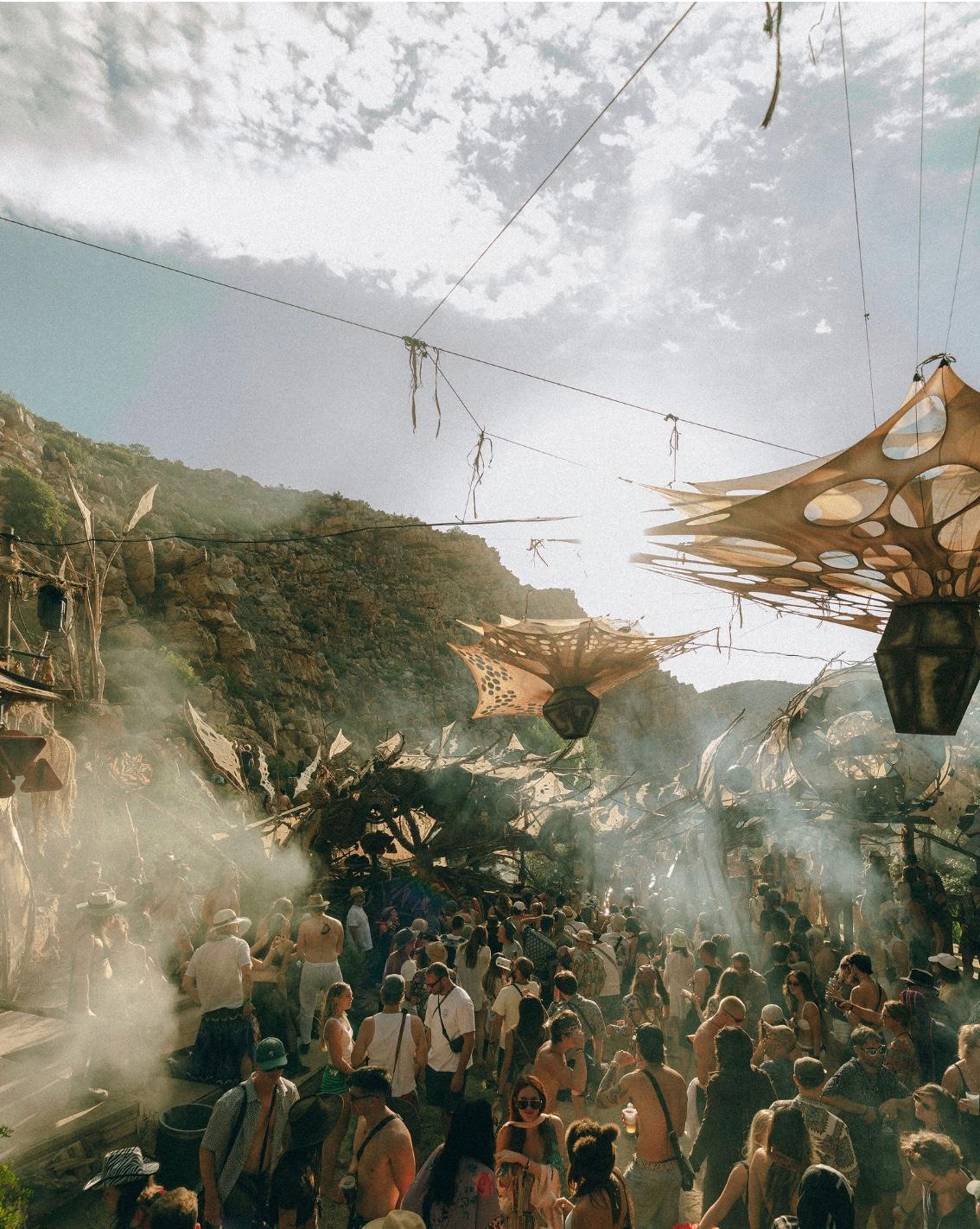
Pangea grew from a desire to create something that felt more like a temporary world than a festival. A space where music, art, nature, architecture and people could exist as one connected experience, rather than separate parts. It was never about just putting on an event, but about creating a feeling people could step into and become part of.
Pangea is built by its community. Why is that such an important focus?
Because culture isn’t something you can manufacture and hand over to an audience. It only really exists when people feel ownership of it. Pangea is shaped by the builders, artists, crew and guests who all contribute to it in their own way. That shared responsibility is what gives it depth and makes it feel alive.
Each edition feels more intentional and layered than the last. What drives you to keep pushing the boundaries?
Curiosity, mainly. And the sense that there’s always a more thoughtful way to do things. We’re not chasing scale for the sake of it, we’re trying to refine the experience, make it more cohesive, more intentional, and closer to what we originally imagined.
Pangea carries a strong sense of spiritual identity. How has that evolved with each edition, and what impact do you hope it leaves on your community?
It’s become quieter and less defined. In the beginning there was more of an urge to frame it, but over time we’ve realised it’s more powerful when people find their own meaning in it. For us, it lives in presence, connection, nature, music and those moments where people step outside their normal lives and feel something different.
You don’t announce a timetable of acts. What’s the thinking behind keeping that a mystery?
We want people to experience the weekend as a journey rather than something to optimise. When you remove set times, people stop chasing names and start trusting the flow of the environment. It creates more discovery, more openness, and a different kind of presence on the dancefloor.
In past editions, you’ve asked attendees to write down their intentions before entering. What do you hope they carry with them after the festival?
It creates a conscious moment of arrival. It’s less about what the intention is, and more about taking a second to pause and be aware of why you’re there.
What people leave with is often something completely different, but hopefully it’s a sense of connection, perspective or even just a subtle shift in how they see things.
How would you describe the feeling you’d like your guests to experience when on one of the dancefloors at Pangea?
To feel both held and free at the same time. Safe enough to drop any sense of performance and just be present. When that happens, people connect more deeply with the music, with each other, and with themselves, and that’s really what it’s all about.
Music, lighting, and decor at Pangea always feel inseparable. How do you keep pushing boundaries to create those full sensory experiences?
We try to think of everything as one system rather than separate departments. Sound, lighting, architecture, décor, even how people move through the space, all need to work together. The best results come when everyone is aligned from the beginning and designing towards the same feeling, rather than adding things on afterwards.
If you had to give yourself and Pangea one criticism or tip to improve, what would it be?
We can sometimes lean too far into the romantic side of things and underestimate the importance of structure and discipline behind it. There’s a constant balance between protecting the magic and building the systems that allow it to exist sustainably. That’s something we’re still learning.
There have probably been many, but if you had to choose one highlight over the years at Pangea, what would it be?
For us, it’s the ability to build and create these worlds as a form of creative expression. But more than anything, it’s the strength of the crew that brings it all together. After weeks of giving everything, seeing those familiar faces on the dancefloor, sharing that energy we’ve created together, is truly special.
Those moments of connection, when you realise you’ve built something magical as a collective, stay with you.
How much work is it to create and run a festival?
A huge amount. What people experience over a few days is the result of almost a year of work behind the scenes. Planning, design, logistics, building, problem-solving, and then taking it all down again.
It’s intense, but it’s also what makes those few days feel so meaningful.
If you had to describe the music and genres on offer at Pangea, how would you?
It’s eclectic and designed as a journey rather than something fixed to genres. Canyon leans deeper and more hypnotic, while Enigma allows for more playful, unexpected and exploratory moments. The idea is that the music evolves with the energy of the space rather than following a rigid structure.
How do you go about curating the lineup?
We look for artists who understand storytelling and can read a room. It’s less about popularity and more about trust, timing and how someone fits into the wider journey. The goal is to create a flow across the weekend, where each set feels like it belongs to something bigger.
Without giving too much away, what can people expect from this year’s edition?
A more mature version of Pangea. We’ve spent a lot of time refining the environments, strengthening the production and infrastructure, and focusing on the smaller details that people might not consciously notice but definitely feel. It should feel more complete, more grounded.